

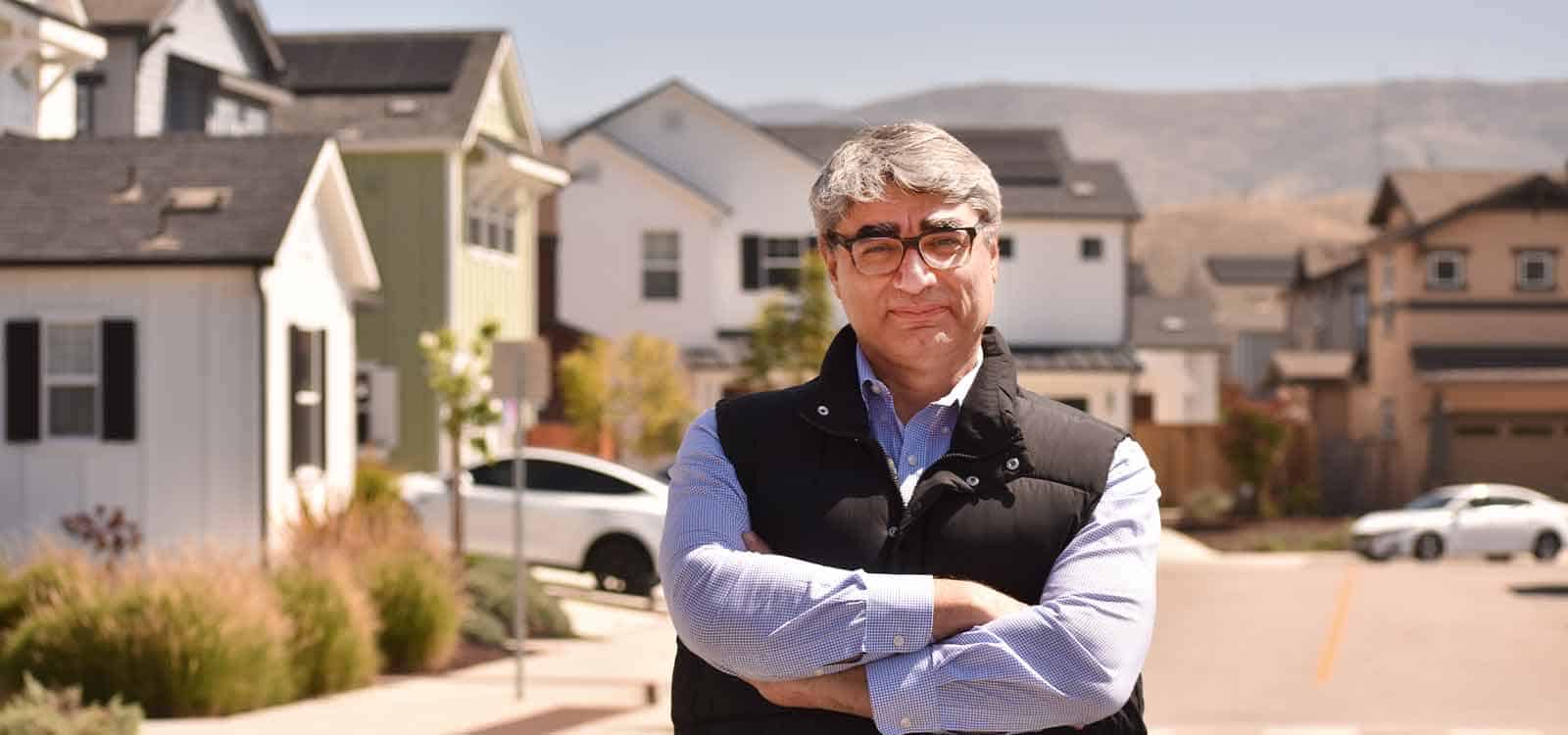
Several speakers, representing a variety of fields, will discuss developing agricultural land
As home ownership in California reaches its lowest levels in 80 years, several experts will discuss the balance between repurposing agricultural land for community development projects and the desire for open space preservation during the inaugural Real Estate Day on May 18 at Cal Poly.
This year’s theme, “Agricultural Land and Community Growth: Balancing Housing Needs, Agricultural Value and Open Space,” will explore a variety of approaches to housing, including rezoning farmland for residential development.
The city of San Luis Obispo currently has several examples of this with the San Luis Ranch, the Avila Ranch and the Righetti Ranch — all former farmlands that now feature homes recently built or currently under construction. While the city council has made housing one of its six Major City Goals, for 2025-27, so too is the preservation of open space as the council works to maintain the lifestyle locals often refer to as “The SLO Life.”
“Even if growth is justified, the answer is not random sprawl but careful and efficient expansion,” said Hamed Ghoddusi, director of the Cal Poly Real Estate Initiative, which is hosting the real estate summit. “The challenge is to identify forms of growth that preserve scenic and agricultural value while also allowing new housing and community-serving uses.”
The Real Estate Initiative is a joint effort between the Orfalea College of Business and the College of Architecture and Environmental Design.
Real Estate Day will be held from 1-5 p.m. at the Swanson Center of Effort Conference Hall on campus and will feature experts from real estate, agriculture, housing, conservation, planning and additional fields. Tickets are $45, or $10 for current students, faculty and staff.
According to the California Department of Housing and Community Development, home ownership rates in the state are at their lowest since the 1940s. Meanwhile, during the last 10 years, fewer than 80,000 new homes were built across the state each year as home construction continues to fall far below the projected need of 180,000 additional residences annually.
That shortage has contributed to high rents and home prices, which are among the highest in the nation. According to a report released last month by the state’s Legislative Analyst’s Office, the median home value of mid-tier homes in California is now roughly $775,000. According to Zillow, the typical home value in San Luis Obispo was $1.1 million in March, an increase of 2.4% over 2025 numbers.
A lack of housing doesn’t just impact those who need it, Ghoddusi said. When vital professionals, such as physicians and educators, can’t find housing, that impacts existing homeowners.
“Research has shown that tight housing supply in California has had broader economic costs,” Ghoddusi said. “Certain communities, including the Central Coast, are having challenges with services such as healthcare due to rising housing costs.”
While building more homes might reduce costs, one obstacle is local zoning laws that limit available land. “Given that context, carefully planned conversion of some agricultural land may be part of the solution,” Ghoddusi said. “The question is not whether all such land should be converted, but when, where and under what conditions conversion may create substantial new community benefits.”
Adding more development to communities known for open space and small-town charm can be controversial. When San Luis Obispo farmer Ernie Dalidio proposed selling his family farm to developers in the 1990s, it sparked years of controversy and legal battles. Today, the land still includes a farm but also has hundreds of homes and commercial developments, such as the Target store and the SLO Ranch Marketplace.
“Any discussion of agricultural land conversion naturally raises strong concerns about sprawl, environmental impact, water availability, infrastructure burdens, new traffic, pressure on public infrastructure and the long-term loss of open space,” Ghoddusi said. “Also, one may ask: Why not rely on alternative policies, such as higher density or adaptive reuse? These are genuine concerns, and they deserve serious discussion. One purpose of the event is exactly to bring those trade-offs and risks into the open discussion and examine them carefully.”