

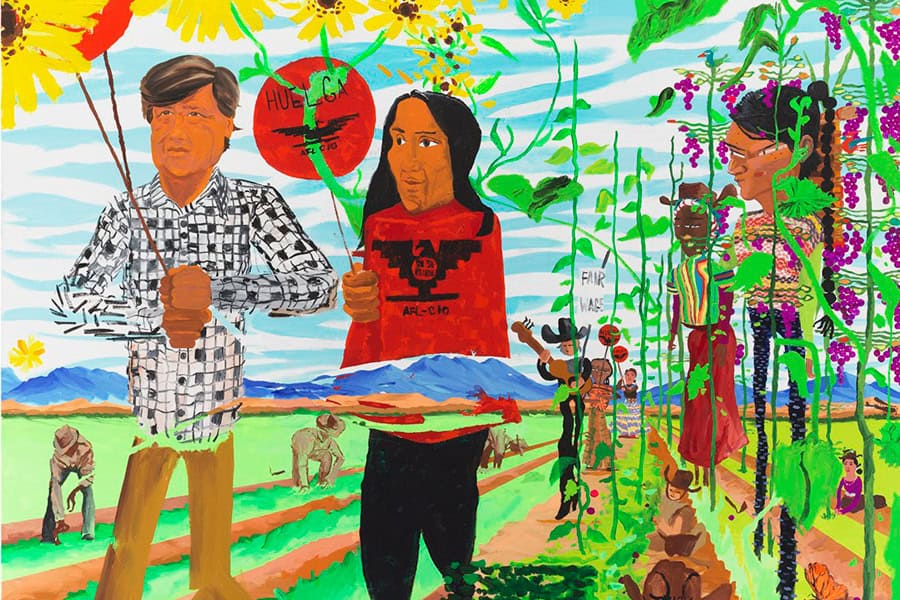
Esteban Cabeza de Baca’s paintings dance between histories, landscapes, and time – speaking to his ancestry and inviting visitors to consider all stories of immigration, Indigenous identity, and resistance. Cabeza de Baca was born into a family of labor activists working in San Ysidro, California, and spent his childhood driving the long journey between California and New Mexico. Ranging from 2015 to 2024, the eleven paintings in the gallery explore issues of belonging and identity, activism, and joy and celebration. The SLO Museum of Art is proud to house the artist’s first solo Museum exhibition on the West Coast. The exhibition will be open Thursday through Monday from February 22nd – June 22nd, 11am until 5pm.
Often painting on square canvases, Cabeza de Baca’s paintings feel like snippets of time, as if recreated from a dream or a childhood memory. In March to Sacramento, he portrays the Delano grape workers who marched to protest poor working conditions and low wages, whose work, in collaboration with Cesar Chavez, led to the formation of the United Farm Workers, the largest farm worker union in the United States. Other works, such as Teatro Campesino and Suenos, further highlight an important conversation around agricultural labor and human rights. Throughout the work, you may notice depictions of Mexican cloth dolls gifted to the artist by his mother. The dolls ground the images in the artist’s childhood while reaching towards – and remembering – the future. Works like Medicina Lunar and Hybrids use the artist’s ancestral landscapes as another distinct voice before they are lost to time and memory. Esteban Cabeza de Baca’s work explores the personal stories and significant civil movements that shape our perspective, sharing a clear vision for a more equal world.