
The last few years have seen exciting progress in housing development and unit construction in San Luis Obispo, but we still have major strides to make to meet the ever-growing demand for housing.
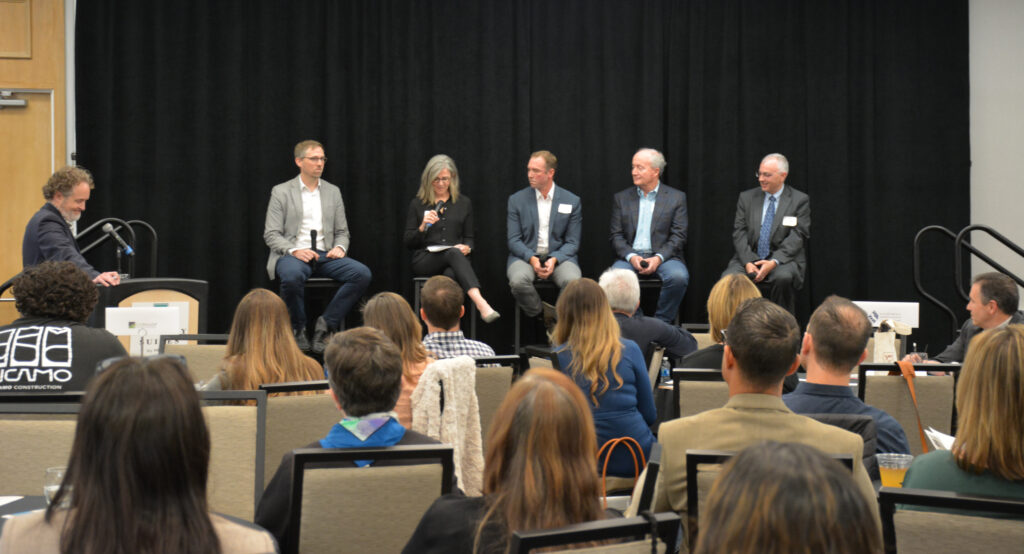
This year’s Housing Summit on March 14 commenced as a sold out, in-person event. Hosted by the Housing Collaborative of the Central Coast, a diverse group of economic development and housing policy speakers and panelists came together to discuss current and future challenges and outcomes for housing on the Central Coast. The theme of “collaboration” quickly took shape and the necessary need for concentrated efforts on working together to solve housing issues became clear.
Jocelyn Brennan, CEO of HRM Consultants, shared that as a region, only 17% of families can afford to purchase a home in SLO County, with an average household income of $242,800 needed. She stressed that legislators know what we’re up against and are pushing to move housing policies and project pipelines quickly, to help alleviate the housing crisis.
It’s clear that there is not enough housing to support the growing population in SLO County. The long permitting process and red tape to get building projects started, along with the increasingly high cost of housing is why, “people are leaving California,” according to event emcee Sanjay Wagle, Senior Vice President for Governmental Affairs for the California Association of REALTORS®.
California has passed legislation to help with housing and agreed that to make stronger impacts, a better, quicker enforcement of policies with more bipartisanship and collaborative efforts are needed. AB 2592 added homeownership housing to the state’s study of adaptive reuse projects occurring in underutilized state buildings and on surplus state lands, effectively repurposing buildings into housing. SB4 allows development on specified sites owned by religious institutions and higher education institutions, making the process a bit easier to build on the land they were already on and create more innovative housing options.
The event continued with a panel discussion moderated by Cal Poly Professor, Dr. Matthew Moore, who asked thoughtful questions that further explored what is working now in housing and what will work in the future. The panelists all agreed that there has been substantial improvement in seeing more collaborative efforts being made on all levels, but more needs to be done.
Nick Tompkins, Owner of NKT Commercial and Aaryn Abbott, VP of Abbott | Reed, expressed the need for California Environmental Quality Act (CEQA) reform and a way to “figure out how to do housing together in alignment for all.” Ken Trigueiro, CEO of People’s Self Help Housing and Donna Lewis, Branch Manager of Guaranteed Rate, shared the need for down payment assistance programs and systems to help first time home buyers. Tony Tomasello, Manager of Planning at RRM Design Group, shared how tenant rights play a part in future policy.
Some common themes that came out of the Housing Summit in relation to improving the housing crisis on the Central Coast include the need for:
- Down payment assistance systems.
- Programs from employers that help employees buy homes.
- Philanthropic efforts to help with housing and development loans.
- Private down payment programs.
- Concentrated plans for small lot subdivisions.
- Creating all types of housing, including single family and multi-family housing.
- Community loan incentivization programs from banks.
- Streamlining steps to permitting, making the process faster and easier to get through.
- Collaboration and getting creative with partners in local and private sectors that can help the housing crisis in all aspects, to match job growth and help retain quality employees and families to the area.
Dr. Cornel Morton, Board President of the Diversity Coalition San Luis Obispo County, stressed the importance of diversity in housing, especially as we move forward in creating new housing policies. “How do we address people who are marginalized? We have a responsibility to our time, and place and now,” said Martin, sharing that we can reinforce diversity in the following ways:
- Showing value for one another.
- Allowing access to programs for low-income populations.
- Creating job opportunities for marginalized groups of people.
- Being willing to engage with groups of people that you are unfamiliar with.
- Being creative in finding solutions.
- Taking risks.
Noni Ramos, CEO of the Housing Trust Silicon Valley rounded out the Summit by sharing the successful housing initiatives and programs in Santa Clara County with the intention of sparking ideas for our county to learn from. Each of the programs focused on collaboration and partnerships, “bringing local levels together with anchor organizations.” Leveraging funds quickly “can only be done with an alignment of coordination and collaborative efforts of all involved,” said Ramos.
The first in-person Housing Summit since 2019 made it clear: it is up to all of us, as a community, to show support for the creation of all new types of housing. Support representatives who champion housing initiatives, show up to local hearings and government meetings, and stay up to speed on development planning. With this pivotal political year, it’s important to remember that your vote shapes our housing landscape. Make it count!