
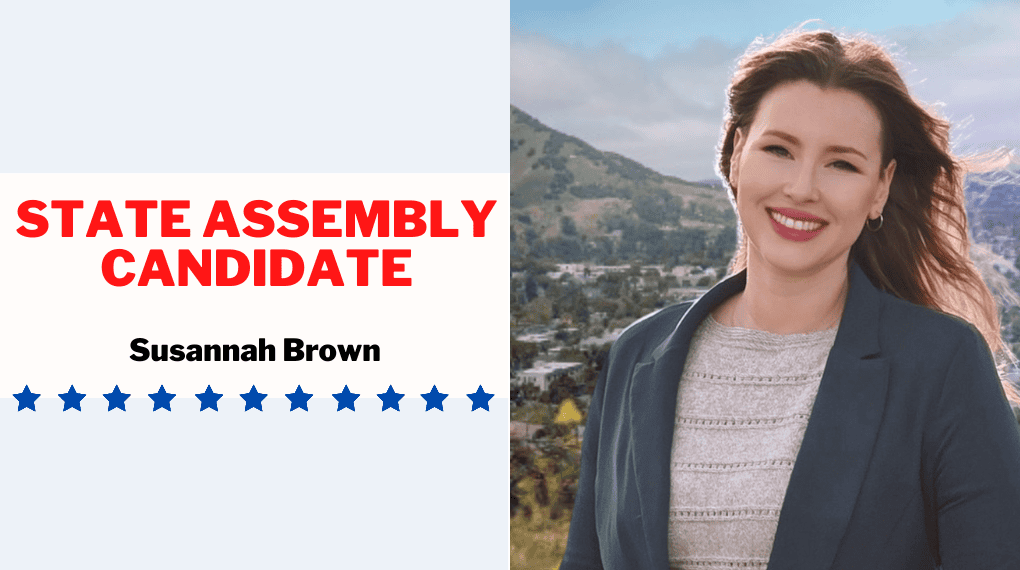
We asked each candidate to answer a few questions so that you can know a little more about their priorities. Click on each question to reach the candidate’s answer. See responses from other candidates: Dawn Addis and Shannon Kessler.
Candidate Statement
I was born in San Luis Obispo and am now raising my children here in our public schools. I’m a data scientist, business owner, and former Chair of the South County Chamber of Commerce, where I also served for several years on the board and chaired its Government Affairs Committee working with employers on housing, water reliability, infrastructure investment, and regional economic priorities.
For years, I have partnered with local governments, schools, and community leaders across the Central Coast advancing practical solutions that support housing delivery alongside reliable water systems, stable energy capacity, and long-term economic opportunity.
In Sacramento, I will focus on housing that actually gets built, continued operation of Diablo Canyon alongside renewable expansion, strengthening regional water reliability, and supporting stable school funding that communities can depend on year after year.
These priorities reflect what Central Coast families, employers, and schools need to plan and grow with confidence.
Rank the issues in order of importance for our county:
- Housing
- Infrastructure (roads, water, broadband, etc.)
- Economic recovery & head of household jobs
- Regional collaboration
- Government regulation
- Public safety
- Public health
- Climate action & resilience
- Homelessness
- Taxes
- Diversity, equity and inclusion
If elected, what will you do to address the issue you identified above as most significant?
Housing is the most immediate constraint on workforce stability across the Central Coast. Employers, schools, and healthcare providers are struggling to recruit and retain workers because housing supply has not kept pace with demand.
In the Assembly, I will support policies that help communities deliver housing alongside reliable water systems, transportation access, and stable energy capacity so growth can occur responsibly. Continued operation of Diablo Canyon remains an important part of maintaining grid reliability as our region grows.
I will also support apprenticeship pathways that expand the construction workforce needed to move projects from approval to completion.
Housing stability strengthens school enrollment, supports local employers, and helps families remain in the communities where they work. The priority should be housing that actually gets built in places prepared to support long-term residents.
Which theme in the Chamber's regional economic vision, Imagine SLO, do you think deserves the most focus in the next four years and why?
Coordinating workforce housing delivery with infrastructure readiness is the most important step we can take to strengthen regional economic stability over the next two years.
Across the Central Coast, employers, schools, and healthcare providers are struggling to recruit and retain workers because housing production has not kept pace with demand. At the same time, communities need reliable water supply, transportation access, and energy capacity to support growth responsibly.
A coordinated regional approach can help move projects forward more predictably and successfully. From the Assembly, I will support policies that reward alignment between housing approvals and infrastructure readiness, expand apprenticeship pathways tied to construction and skilled trades, and strengthen partnerships between local governments, employers, and education systems.
This approach supports workforce housing delivery while strengthening long-term regional economic stability.
What are you most proud of having contributed to our community in the past ten years?
Over the past decade, I have worked across the Central Coast to strengthen coordination between employers, schools, local governments, and regional partners advancing housing, water reliability, infrastructure investment, and economic opportunity.
As Chair of the South County Chamber of Commerce and a board member for several years, including service as Chair of its Government Affairs Committee, I worked closely with business and public sector leaders on workforce housing, transportation access, and regional water priorities. I have also supported housing efforts across the region through professional collaboration on projects moving from planning to implementation.
In education, I served as PTA President at a local elementary school, participated on School Site Council, served on a district Parent Leader Advisory Group, and held a role on the PTA District Board.
I am also active with Rotary through Pismo Beach and regularly volunteer supporting South County Chamber, Lumina and Dignity Health community fundraisers.
Which Assembly Committee has the biggest impact on our region and why?
The Assembly Budget Committee, along with the Housing and Community Development Committee, has the greatest impact on the Central Coast because nearly every regional priority depends on sustained and coordinated state investment.
Water reliability projects, transportation corridor improvements, workforce housing infrastructure, energy reliability, and school stability all depend on how the state allocates resources and structures implementation timelines. Budget decisions also determine whether schools receive stable ongoing funding rather than short-term programs that create uncertainty for students and educators.
Effective representation means aligning mandates with resources and ensuring programs reflect the needs of coastal and rural communities like ours while securing consistent long-term investment supporting families, employers, agriculture, and schools.
Do you think the state government is doing enough to support housing in our region? If not, what would you do to change it?
The state has increased housing targets but has not consistently addressed the barriers that prevent approved projects from reaching construction. Financing gaps, CEQA litigation risk, infrastructure readiness, insurance availability, and water reliability remain major constraints across the Central Coast.
In the Assembly, I support targeted CEQA reform that maintains environmental protection while reducing delays for projects consistent with adopted local plans and workforce housing near job centers. Expanding state financing tools for middle-income workforce housing and improving coordination between housing requirements and investments in water systems, transportation corridors, and grid capacity are also essential.
Strengthening apprenticeship partnerships with regional trades organizations will help increase construction capacity.
The goal should be housing that actually gets built and supported by the infrastructure communities need to sustain long-term residents, employers, and schools.
Do you think our business environment is healthy? If not, what would you do to change that?
The Central Coast benefits from strong local employers and entrepreneurs, but rising costs, infrastructure constraints, regulatory complexity, insurance availability challenges, and uncertain agency timelines are making it harder to sustain head-of-household jobs in our region. Improving the business environment starts with reliability. Reliable water systems, stable energy capacity, available insurance coverage, predictable permitting timelines, and clearer coordination across state agencies determine whether employers expand locally or relocate elsewhere. Continued operation of Diablo Canyon alongside renewable development supports both affordability and grid stability for households and businesses.