
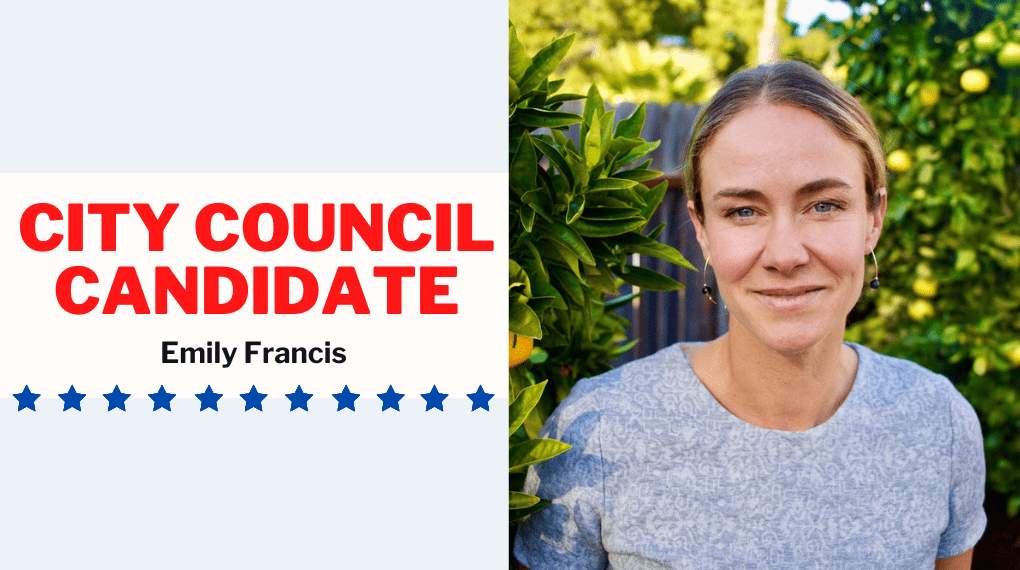
We asked each candidate to answer a few questions so that you can know a little more about their priorities. See responses from other candidates: Joe Benson, James Papp and Michelle Shoresman
Rank the issues in order of importance for our city:
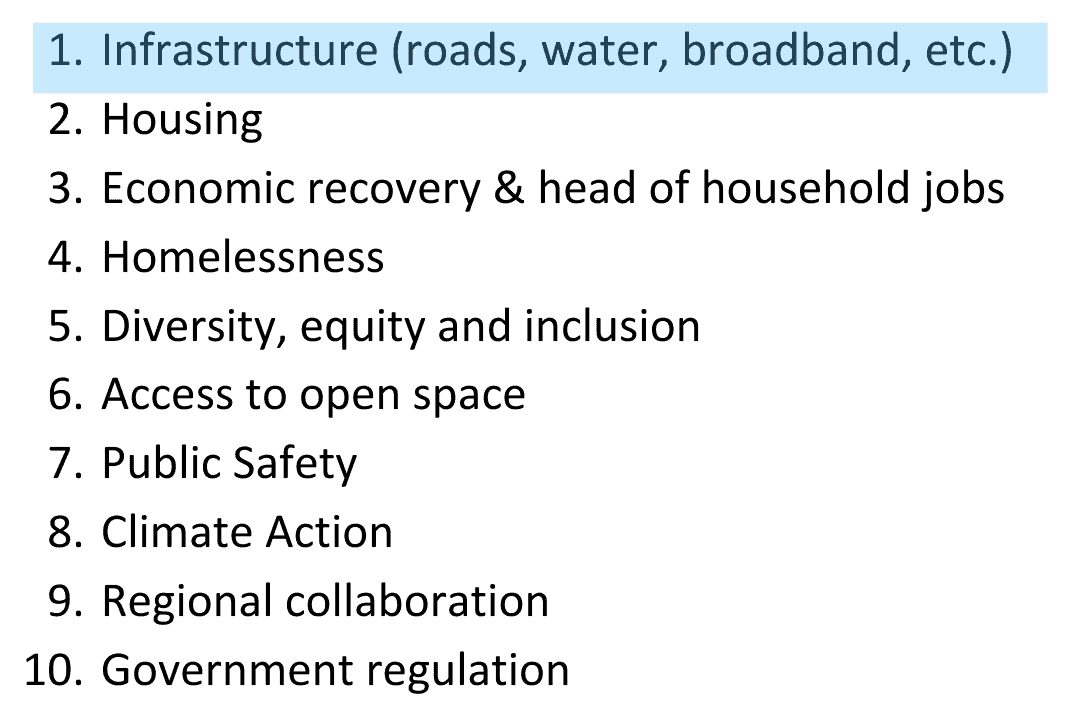
If elected, what will you do to address the issue you identified above as most significant?
I plan to focus on our transportation network to lower the emissions that come from commuters into our city. Pre-pandemic, we had the second highest bus ridership per capita in the state. We can bring people back to mass transit.
Another way our city has moved to lower emissions is through bike and pedestrian routes. As the parent of an elementary student, I’ve experienced first hand the need for a focus on safer infrastructure to get our kids to school. We need to finish connective corridors so families can feel more comfortable biking and walking in our community.
What is your approach on traffic and parking issues? Are there any policies that you are committed to advocating for or against?
Pre-pandemic, San Luis Obiso had the second highest ridership of our buses per capita in the state. Covid derailed our progress and getting people back on the bus is the first step towards alleviating traffic issues. If we’re serious about getting people to ride bikes, we need to make sure that our bike infrastructure is safe, separate, and fully connected throughout our city. Finally, while bus and bike trips are important, accessibility is essential. We must ensure that we have adequate dispersed accessible parking for our business districts so all members of the community can enjoy our downtown.
Which theme in the Chamber’s economic vision, Imagine SLO, do you think deserves the most focus in the next four years and why?
The theme of Environmental Stewardship in the Chamber’s economic vision is integral to so many of the other pieces. If we “support and promote the benefits of compact urban form, infill development, appropriate density and increased building heights where appropriate; oppose development that is likely to induce urban sprawl.“ We will not only get closer to our climate goals, but we can also foster creating connections with more thoughtful housing and encourage a love of place by preserving and expanding our greenbelt including the essential agricultural lands that encircle our city.
For more than ten years, buildings in the downtown core have been allowed to be up to 75 feet tall if they provide significant community benefits; do you support these current regulations? Why or why not?
The current regulation around 75’ buildings in the downtown core are focused around incentivising residential units in a mixed use context. To meet our goals of providing housing at all price points but most importantly, affordable housing within walking and biking distance of work and leisure, we must encourage creative infill in our downtown. While taller buildings are a part of achieving this, we must also plan for missing middle housing in areas surrounding the core with an emphasis on clustered, multi-family units. Currently, residential density downtown is insufficient to support a more pedestrian-focused design desired by many SLO residents.
For the first time in decades, the City is approaching our self-imposed 1% limit on new housing development. Would you support amending this 1% cap to address our housing crisis or do you believe that it is essential to maintain this limit?
While recent developments in the city have pushed us over the 1% limit, for years, the city was far below that number meaning that our recent surge is more akin to catching up rather than a building boom. The lack of building in the past while simultaneously focusing on attracting economic investment, has meant there is an imbalance between housing and the need for workers. The city must work to bring sufficient housing for its workforce regardless of a self-imposed limit if we are going to meet our climate goals and reduce the number of commuters driving daily to SLO.
What are you most proud of having contributed to our community in the past 10 years?
As a public school educator, I am incredibly proud of the work I have done with high schoolers in creating a love for history, government, and a general sense of intellectual curiosity. My time in the classroom brought me immense joy and connection to the next generation who I am convinced is the best among us. Serving as both a teacher and as a club mentor to a variety of student-run organizations gave me insight to the fears and hopes of teens in our community. My goal is to live up to their vision for our future.
What is the biggest opportunity for our City in the next four years?
We have to do everything in our power to address the climate crisis, and I believe that addressing it through thoughtful housing, transportation and planning, we can not only make our city more resilient but also a stronger community.
Is there something the city is not currently focused on that you would bring to the forefront if elected?
We must focus on childcare for 0-3 to allow people to stay in the workforce and address a major gap in our DEI goals. Childcare gives people choices and alleviates a gap that disproportionately impacts low income and BIPOC communities.