
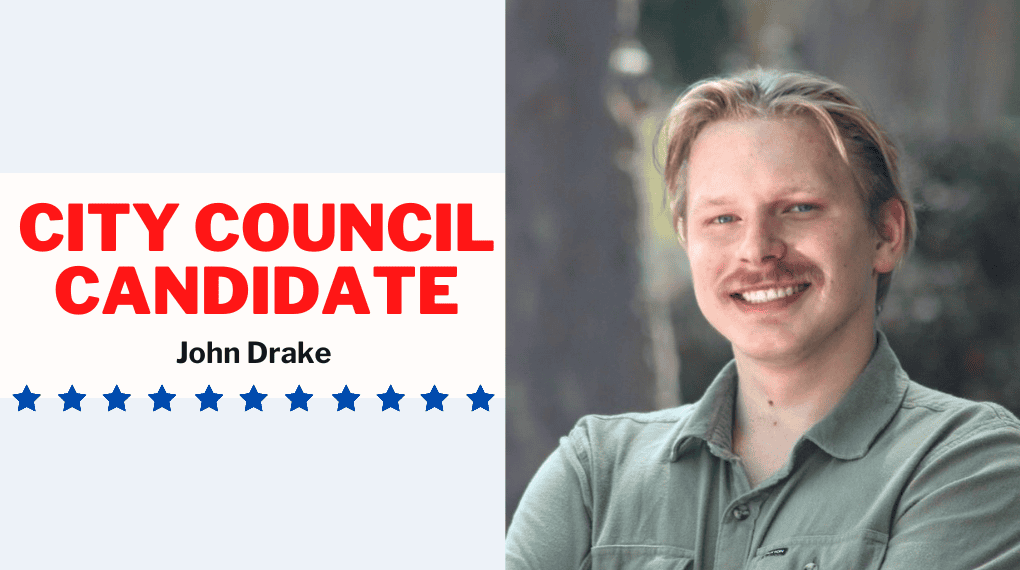
We asked each candidate to answer a few questions so that you can know a little more about their priorities. Click on each question to reach the candidate’s answer. See responses from other candidates: Mike Boswell, and Jan Marx.
Rank the issues in order of importance for our county:
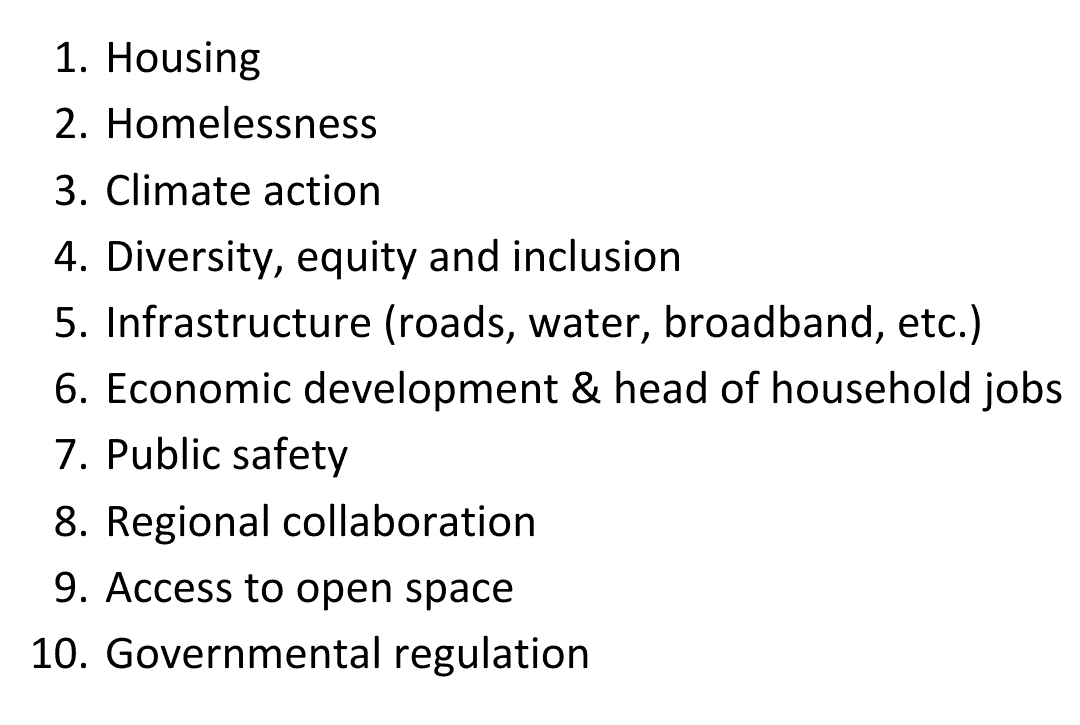
If elected, what will you do to address the issue you identified above as most significant?
The housing crisis remains a significant concern, as many residents struggle to find affordable housing options. To address this, I propose implementing inclusionary zoning policies that mandate at least 15% of new residential units in larger developments be set aside for low- and moderate-income families. This will ensure that as the city grows, affordable housing options are built alongside market-rate units. Additionally, creating a local housing trust fund will provide financial support for affordable housing projects and down payment assistance for first-time homebuyers. Streamlining the permitting process for developments that meet these affordability criteria will encourage the construction of more affordable units, helping to alleviate the housing shortage. These strategies will help create a more diverse and inclusive community where everyone has access to safe and affordable housing.
Which theme in the Chamber's regional economic vision, Imagine SLO, do you think deserves the most focus in the next four years and why?
I believe the Empowering Innovation theme deserves the most focus in the next four years. Entrepreneurship is at the heart of San Luis Obispo’s economy, and fostering a supportive
environment for innovators and entrepreneurs is key to our city’s future. By promoting the growth of public and private incubators, accelerators, co-working spaces, and maker spaces, we can provide essential resources and relationships that help transform bright ideas into reality. Encouraging development in future-oriented industries such as cybersecurity, renewable energy, data science and agritech can leverage our unique regional assets and drive economic growth. Supporting Cal Poly’s innovation efforts and ensuring fair regulations for emerging business models will also be crucial. Focusing on empowering innovation will stimulate job creation, enhance economic resilience, and reinforce San Luis Obispo’s reputation as a haven for entrepreneurship.
What is your approach on traffic and parking issues? Are there any policies that you are committed to advocate for or against?
To address parking challenges and prevent overflow into surrounding neighborhoods, I propose reducing fees for structured parking downtown to encourage its use by both residents and visitors. This can be achieved by eliminating the structure rate maximum while maintaining or reducing the structure fee to $2.50 per hour. Meanwhile, increasing the meter parking rate in the city center to $3 per hour, with the first two hours on Sundays remaining free, will help keep the parking program solvent. Additionally, I advocate for subsidizing parking for downtown employers and employees to ensure they have affordable parking options, reducing pressure on neighborhood streets. Regarding traffic, I am against robust road alterations without a comprehensive community development plan that promotes walkability and robust public transportation. This approach will create a more vibrant, accessible downtown and reduce our overall carbon footprint.
For more than ten years, buildings in the downtown core have been allowed to be up to 75 feet tall if they provide significant community benefits; do you support these current regulations? Why or why not?
I support maintaining the current regulations allowing buildings up to 75 feet tall in the downtown core, provided they adhere to principles of human-scale development and architectural integrity. Human-scale development focuses on creating environments that are accessible and comfortable for pedestrians, enhancing street-level interaction and fostering a vibrant public realm. Buildings should feature articulated facades, varied materials, and active ground floors to create a dynamic streetscape. Additionally, new developments must respect the existing character and scale of our downtown while providing tangible community benefits such as affordable housing, public spaces, or cultural amenities. By focusing on thoughtful, context-sensitive design and ensuring these projects contribute positively to the community, we can accommodate growth while preserving the unique charm of San Luis Obispo.
For the first time in decades, the City is approaching our self-imposed 1% limit on new housing development. Would you support amending this 1% cap to address our housing crisis or do you believe it is essential to maintain this limit?
I support amending the 1% cap on new housing development to address our housing crisis. While this policy was originally intended to manage growth responsibly, the current housing shortage requires us to adapt and respond to new challenges. By increasing the cap, we can provide more housing options for residents, alleviate upward pressure on rents and home prices, and support a more diverse and inclusive community. However, it is crucial to ensure that any increase in development is accompanied by strong environmental and design standards to maintain our city’s character and sustainability. We should also prioritize affordable and workforce housing to ensure that new growth meets the needs of all residents, not just those who can afford market-rate housing.
What are you most proud of having contributed to our community in the past ten years?
Over the past ten years, I am most proud of my work advocating for affordable housing and homelessness prevention in San Luis Obispo. As a Director for Public Policy at Homeless-R-Us, I have worked closely with local organizations, government agencies, and community members to develop and implement policies that provide support and resources to those experiencing homelessness or at risk of becoming homeless. Through these efforts, I have helped secure funding for innovative housing solutions, such as transitional housing and supportive services, that have provided stability and hope for many residents. Additionally, my role as a Project Manager and Coordinator for a Cal Poly research grant with the SLO County Behavioral Health Department has allowed me to contribute to mental health initiatives that address the root causes of homelessness and support individuals in achieving long-term recovery. I have also been actively involved in community outreach and education efforts, helping to raise awareness about the importance of affordable housing and the need for comprehensive support services.
By bringing together diverse stakeholders and advocating for policies that prioritize the needs of our most vulnerable residents, I believe I have made a meaningful impact on our community’s ability to address the challenges of housing and homelessness. I am committed to continuing this work and building a more inclusive, compassionate, and resilient San Luis Obispo.
What is the biggest opportunity for our City in the next four years?
The biggest opportunity for our city in the next four years is to become a model for sustainable and inclusive urban development. As we face the challenges of climate change, housing affordability, and economic inequality, we have the chance to implement forward-thinking policies that prioritize environmental sustainability, social equity, and economic resilience. By investing in green infrastructure, renewable energy, and sustainable transportation, we can reduce our carbon footprint and create a healthier, more livable city. At the same time, by promoting affordable housing, supporting small businesses, and fostering a diverse and inclusive community, we can ensure that all residents benefit from our city’s growth and prosperity. This holistic approach will position San Luis Obispo as a leader in sustainable urban development and provide a blueprint for other cities to follow.
Is there something the City is not currently focused on that you would bring to the forefront if elected?
If elected, I would bring a stronger focus on mental health services and support to the forefront. While our city has made progress in addressing homelessness and housing affordability, mental health remains a critical area that requires more attention and resources. By expanding access to mental health services, increasing funding for community-based programs, and integrating mental health care into our overall public health strategy, we can better support residents in need and address some of the root causes of homelessness and economic instability. This focus would not only improve individual well-being but also strengthen our community as a whole, creating a safer, healthier, and more resilient San Luis Obispo for all.