
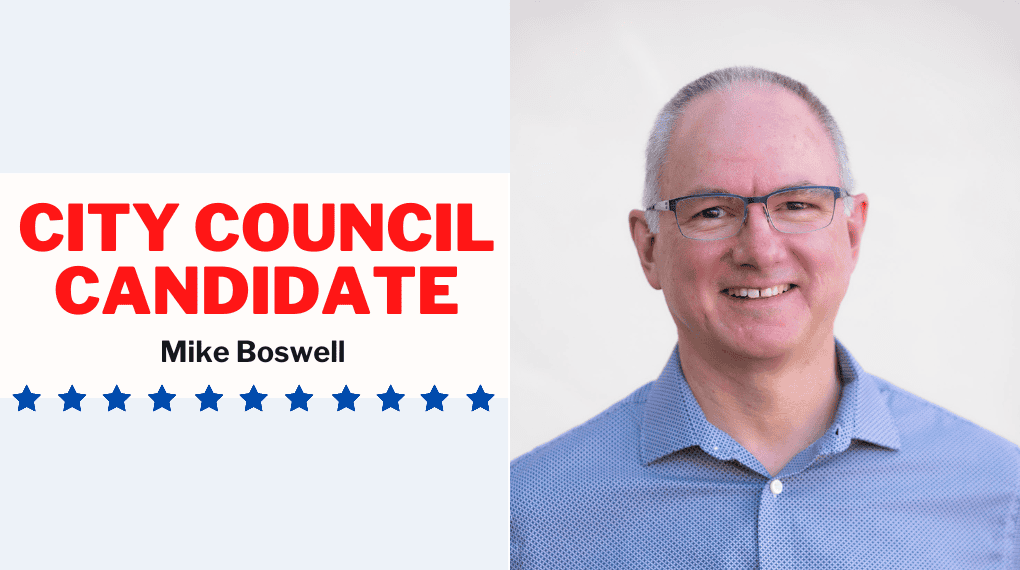
We asked each candidate to answer a few questions so that you can know a little more about their priorities. Click on each question to reach the candidate’s answer. See responses from other candidates: John Drake and Jan Marx.
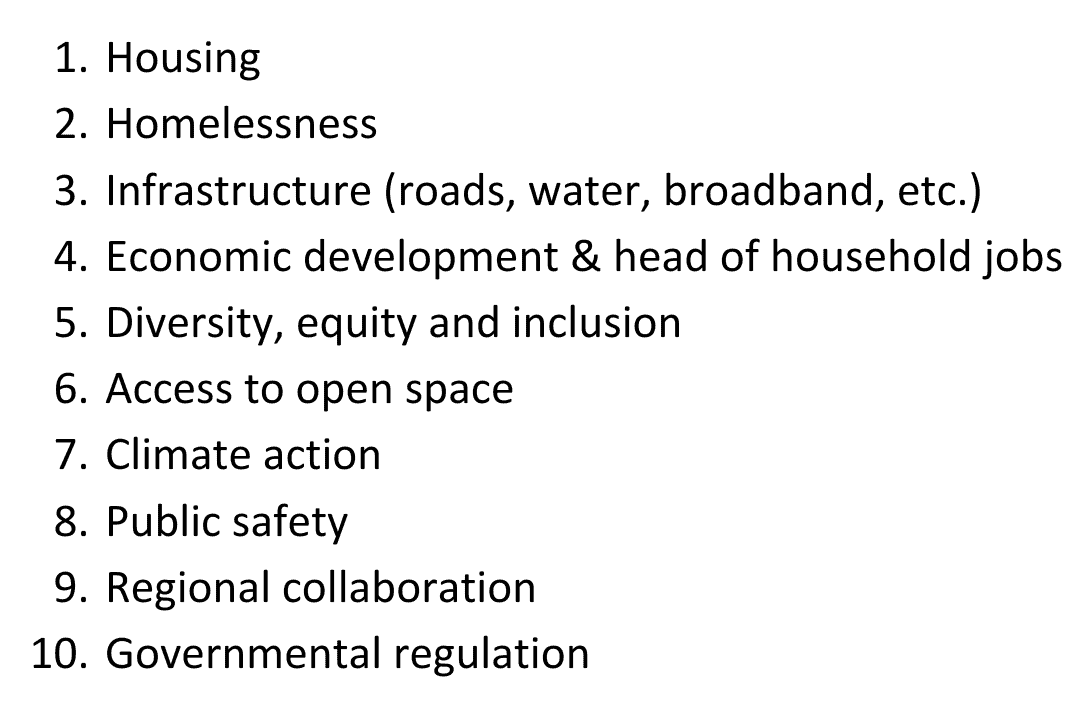
Rank the issues in order of importance for our county:
If elected, what will you do to address the issue you identified above as most significant?
First, the city needs to continue working with the state, county, and local non-profits, to support the building of affordable housing. There are currently about 500 new units of affordable housing in the pipeline for SLO. I will strongly advocate for continuing and expanding this effort. Second, the city needs to build market-rate housing. I support continuing to build homes in our planned expansion areas such as Avila Ranch, Orcutt Area, and Margarita Area and identify appropriate opportunities for infill development, especially multi-family. This growth should be managed to not exceed our 1% per year growth cap. In addition, the needed infrastructure to support this growth such as roads, schools, fire protection, etc., must be developed concurrently. Finally, the city needs to ensure that rental housing in SLO is healthy and safe and that renters are protected from predatory landlords.
Which theme in the Chamber's regional economic vision, Imagine SLO, do you think deserves the most focus in the next four years and why?
As an educator, lifelong learning really resonates with me. I’ve been a supporter of moving education beyond the classroom and into the community. I’ve given talks about sustainability, climate action, and city planning for Leadership SLO, the SLO Citizen’s Planning Academy, and other civic groups. I think efforts like Building a Better SLO have had a positive effect on discussions about the future of our community. The more people are informed about what is going on in SLO and how they can get involved, the more invested they will be in the community. I also think we can lean more into our city’s strength in education to develop more of an identity and spur additional innovation and entrepreneurship.
What is your approach on traffic and parking issues? Are there any policies that you are committed to advocate for or against?
Regarding parking, I support the City Council’s May 14 adoption of “option B” which received broad support—including from Downtown SLO and the Chamber—and ensures that the City’s parking fund remains fiscally sound. I’m happy to see that the city was willing to course correct when it was clear that the program in place at the time wasn’t working. Regarding traffic, I support updating the city Vision Zero Plan and implementation of the Tier 1 infrastructure identified in the Active Transportaion Plan. Unfortunately, traffic deaths have increased recently in SLO and this is unacceptable. I will prioritize transportation safety when on the council.
For more than ten years, buildings in the downtown core have been allowed to be up to 75 feet tall if they provide significant community benefits; do you support these current regulations? Why or why not?
Yes, I support. Since no buildings have been built to this height, though, I would like to better understand why. The city could revisit the community benefits issue if there is evidence that they are the limiting factor for height, rather than market forces or financing availability, for example. With the additional height, I hope to see new housing that can bring additional vibrancy and stability to our downtown businesses.
For the first time in decades, the City is approaching our self-imposed 1% limit on new housing development. Would you support amending this 1% cap to address our housing crisis or do you believe it is essential to maintain this limit?
I think it is essential to maintain the 1% cap. It is a contract made with the community many years ago that shows a commitment to smart, balanced growth. I respect that numerous previous City Councils and advisory bodies have reiterated support for this policy. A critical aspect of this cap is that it was designed so that the city could maintain the quality of essential services such as police and fire; when growth occurs too fast these essential services can struggle to keep up. Since affordable housing is exempt from this cap, we can continue to maximize this essential need.
What are you most proud of having contributed to our community in the past ten years?
I have supported in various ways the development and adoption of the city Climate Action Plan for Community Recovery and the city’s goal of being carbon neutral by 2035. I’ve generally provided leadership in this field through my work as a Cal Poly professor including creating and directing the California Climate Action Planning Conference. This was the largest conference of its kind and brought over 200 climate action planning and sustainability professionals to Cal Poly and SLO. Many SLO city leaders and staff participated and gained cutting edge knowledge. In addition, I’ve educated and mentored some of the professional planners in SLO that developed our plan. I advised city officials and community members on starting the SLO Climate Coalition. I’m incredibly proud of this work.
And though it was more than 10 years ago, on the Planning Commission I supported efforts to get more housing built in the city when it wasn’t always a popular position. I supported the update of the Conservation and Open Space Element and adoption of the City’s first certified Housing Element. I dealt with numerous complex projects such as the Court Street Project, Costco/Froom Ranch Development, Prefumo Creek Commons Project (Target), Margarita Area Specific Plan, Airport Area Specific Plan, and Orcutt Area Specific Plan, among others.
What is the biggest opportunity for our City in the next four years?
Lowering the vacancy rate in downtown, especially the large spaces, and expanding retail opportunities for residents. I’m not sure if it is the biggest opportunity, but it regularly comes up when I talk to folks. I believe we have an amazing downtown that is doing well given the struggles evident in our peer communities and the shift to online shopping and work-from-home. I’m glad to see some movement with larger empty spaces. I’d also add that increasing housing in the downtown area would allow for a greater range of businesses to thrive and survive and help smooth out seasonal and daily fluctuations. I look forward to working with the Chamber and Downtown Association on this issue.
Is there something the City is not currently focused on that you would bring to the forefront if elected?
I try to keep up with the rapid changes in technology that may affect cities, especially in the areas of communication, computing and AI, and autonomous vehicles. All of these are affecting how our cities function and are managed. I’m generally supportive of technological innovation, especially when it helps make government more accessible and transparent for citizens. However, we need to be mindful about impacts to the city. I’m interested in facilitating community discussion around these issues so that we are ahead of change and directing it, rather than being in reactionary mode.