
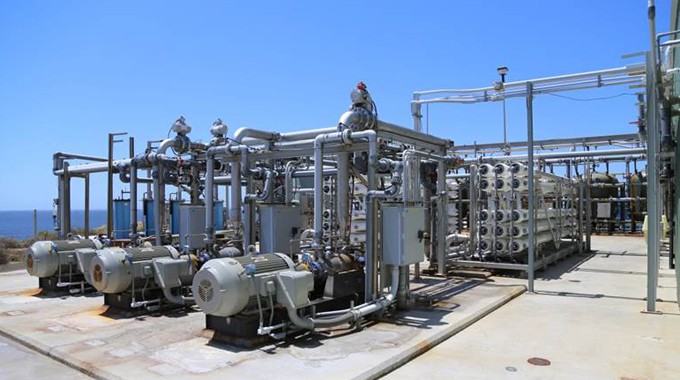
Following hours of volunteer research, discussions and presentations, the San Luis Obispo Chamber of Commerce Board of Directors has recommended that San Luis Obispo County move forward to install a pipeline from the desalination plant at Diablo Canyon in order to bring more water to residents.
The motion, passed in August, reads: The San Luis Obispo Chamber of Commerce recommends that the County of San Luis Obispo pursue a partnership with PG&E to install the infrastructure to connect the existing desalination plant at Diablo Canyon Power Plant to the Lopez Water System.
Before forming the motion that was forwarded to the Chamber board, the Chamber’s Legislative Action Committee heard from Tom Jones, PG&E’s director of governmental relations, about the options ahead; Brad Snook, co-chair of the SLO County Chapter of the Surfrider Foundation, on the impacts to the ocean’s ecosystem; and County Administrative Officer Dan Buckshi on this being one of many possible strategies to address the drought crisis.
“The committee supports more diverse options to increase water in the county,” said Erica A. Stewart, chair of the Chamber’s Legislative Action Committee. “The environmental impact of this project is nominal at this time.”
The Chamber board discussed water conservation, recycling and reuse efforts and agreed that such methods are hugely effective but will not completely solve the county’s water needs.
“We support the partnership between PG&E and the County,” said Charlene Rosales, director of governmental affairs with the SLO Chamber. “We would like to see numerous strategies to address the water crisis, including desalination, reclamation, conservation and the maintenance of our water infrastructure.”
Licensed to produce 1.5 million gallons of water a day, the desalination plant is currently only using 675,000 gallons a day at the power plant, according to PG&E. That leaves 825,000 gallons of water a day available to county residents, business and agriculture.
At its Aug. 25 meeting the County Board of Supervisors voted 5-0 in favor of a plan to partner with PG&E, the owner of the plant, to move forward with the plan. The County’s Drought Task Force and PG&E are currently conducting a 120-day feasibility study and will return to the supervisors after the first of the year.
The plan includes building a seven-mile long pipe that would connect the desalination plant to the Lopez Water System.
The project is expected to cost between $8 million to $11 million and could be funded in part by a state emergency grant for water relief and by local water providers raising their customers’ rates.